For costume designer Camille Benda, the new HBO comedy Youth was a homecoming of sorts. It marked her fourth collaboration with writer, producer and star Sharon Horgan and her production company Merman, and that shared history meant the design work could move quickly. The shorthand was already there, Benda says, so the team could get straight to shopping, fittings and shaping a central character who feels like a genuine East End London creative.
Youth is a half-hour HBO Max comedy with a strong dramatic streak. It centres on Alex, a literary agent whose life is thrown off balance after her divorce. Her son leaves for university, only to come back a few weeks later and turn her routines upside down, while her former husband departs to work on a television series with a new partner. Across eight episodes, Alex juggles a demanding career, a revived dating life and a household that refuses to settle. Directors Dawn Shadforth and Jim O’Hanlon bring the city’s restless energy to the screen, with a cast that follows Alex through its twists.
Starting from the script
Benda’s process always begins on the page. Horgan’s scripts, she explains, are packed with character detail and emotional nuance, and small written clues often connect to larger story points later on. Reading them closely is therefore essential, not optional. That groundwork shaped every wardrobe choice, from Alex’s everyday pieces to the outfits worn by the people around her.
Because she had worked with Horgan and Merman three times before, Benda could move fast once the look for Alex started to form. The pair already shared a visual vocabulary and an understanding of fit and style, which left more room for the hands-on work: hunting down clothes, trying them in fittings and building a wardrobe that reads as stylish without looking staged.
Vintage first, high street second
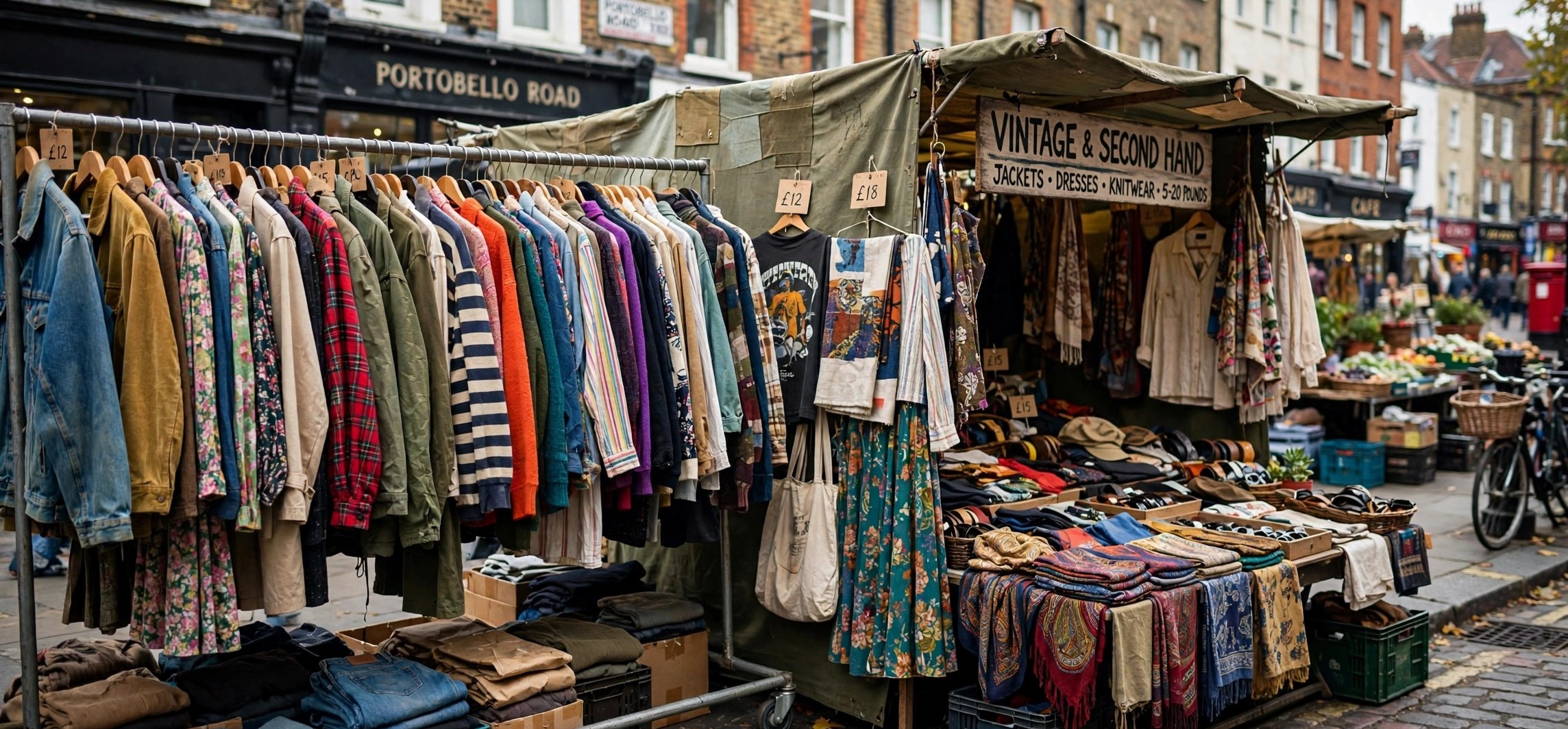
Second-hand designer pieces sit at the heart of Alex’s wardrobe. Benda and her buyers sourced extensively through independent vintage dealers, including SK Vintage, Vintage Curate and Rellik, alongside Portobello Market and other markets across London. High-street labels were mixed in, as were thrift-store finds and online purchases from Dpop, Ebay and Vinted.
Los Angeles shopping trips added another layer. Before travelling to London, Benda browsed vintage shops in LA, where the stock differs from what London dealers carry, giving fittings a wider range of options. The result is a wardrobe assembled from many places rather than bought off a single rail, which helps Alex look like someone who has built her style over years rather than in a single afternoon.
London as a design influence
The city itself did much of the visual work. Shadforth, who directed the first four episodes, kept the edgy, contemporary feel of East London front and centre, treating the area almost as another character. Concrete, grey skies, red buses and a richly multicultural streetscape all fed into the colours and textures of the costumes.
O’Hanlon directed the second half of the series, including an action-packed episode set in Ibiza and the finale. That shift in location brought its own demands, and the costume department’s work extended beyond London, with additional teams in Mallorca for the Ibiza material and in Frankfurt for an episode centred on a book fair.
Working with the cast
Fittings were a genuine collaboration, Benda says. The cast arrived with strong ideas about their characters, and those conversations shaped silhouettes, fabrics and details. The show benefits from a wide range of strong women, she notes, each from a different generation and each with a distinct way of dressing.
Younger performers brought fresh references into the room, including streetwear label Corteiz. Libby Mai, who plays Plum, was closely involved in developing her character’s look across several fittings, while Aran Murphy contributed ideas for his character, Ruari. A costume dyer and breakdown artist helped age Ruari’s clothes convincingly, right down to battered Adidas Superstars, jeans with frayed hems and socks dipped in a beige-grey dye so they appeared to have survived countless washes.
The puzzle of the male characters
One of the trickiest parts of the job was keeping the men distinct. Horgan had written a set of memorable male leads, from Alex’s actor ex-husband Lorcan to Frank, the husband of Sam, and Patrick, a charming and roguish love interest. Each needed a wardrobe that felt specific rather than interchangeable.
Solving that puzzle meant combining vintage finds with carefully chosen contemporary brands. Frank, whose background involves music and bars, wore pieces from East End label Nicholas Daley mixed with Supreme and Adidas, a combination that felt true to his world. Similar thinking went into every male character, so that no two looked as though they had been dressed from the same cupboard.
The team behind the wardrobe
Benda’s department blended familiar faces with new talent. Buyers Becky Gunstone and Angie Egan, who had previously worked with her on Bad Sisters, brought deep experience to the sourcing, while Horgan’s daughter Sadhbh Rainbird worked as a costume assistant, collaborating closely with the younger actors on their looks. Permanent crew in London were joined by the Mallorca and Frankfurt teams, making it a genuinely international effort.
Alongside Youth, Benda has plenty on her plate. She is teaching costume design at the California Institute of the Arts, where she says the work remains rewarding, and she is preparing a ‘zine drawn from her second book. A two-week research trip to Japan and Korea was also on her calendar for November.
Three decades in costume
Benda’s career spans around thirty years across theatre, film, television and commercials, and she has watched the tools of the trade change dramatically. Sketches, paperwork, continuity systems and meetings have all moved into digital form, and online shopping has made it far easier to track down a precise item, whether a blazer from France or denim from Japan.
What has not changed, in her view, is the core of the job. Storytelling, character and deep research still sit at its centre, and technology cannot replace the one-to-one creative time spent with actors in fittings or the collaboration between designers, writers, directors and producers. Those moments, she suggests, are where a character’s look truly comes together.
Two books on clothing and identity
Benda is also an accomplished author. Her first book, Dressing the Resistance, grew out of a 2016 event in downtown Los Angeles that showed her how people use clothes, fashion and costume to make a visual statement. Written during the pandemic, when museum and archive visits were impossible, it became a digital research project tracing how people across time and around the world have used dress to protest and rebel.
Her second book, Bending the Rules: Fashion Beyond the Binary, draws on first-person interviews with people worldwide who have used clothing and costume to express their authentic selves. Co-author Gwyn Conaway contributed custom illustrations, and many contributors shared artwork, photography and archival material to celebrate the many ways gender identity can be expressed through dress. Benda is now working on a ‘zine based on that second book, and a production company is exploring turning her first book into a documentary series.
Asked for a favourite film about the making of films, choosing between Barton Fink, Ed Wood, Hail Caesar, The Player and Living in Oblivion, Benda does not hesitate. Her pick is Hail Caesar.