A chair that looks good and lets you put your feet up does more work than most pieces of furniture in a home. A reclining accent seat fits that brief neatly: it brings character to a living room, a bedroom, a reading nook or a home office, while also giving you somewhere genuinely comfortable to sit. Rather than choosing between a showpiece and a place to relax, you get both in a single footprint, and the range of colours, fabrics, shapes and mechanisms now on sale means there is a version to suit most interiors.
What a reclining accent chair actually is
At its simplest, this is an occasional chair with a built-in reclining action. The accent side of the deal is visual: the chair is meant to stand out a little, whether through its shape, its upholstery or its colour, and to add personality to the room around it. The reclining side is practical, letting you lean back, raise a footrest and settle in for reading, watching television or simply taking a quiet break.
Two kinds of mechanism dominate. Hand-operated versions tend to work with a lever on the side or by shifting your body weight, while motorised versions move at the press of a button. Beyond that basic choice, many designs add extras such as a headrest you can tilt, generously padded arms, a base that turns, or a footrest built into the frame, all of which change how the chair feels day to day.
Styling is just as varied. You will find pared-back modern shapes, traditionally upholstered silhouettes, sleek contemporary leather designs and soft, deep fabric models. That breadth is the point: the chair should sit happily alongside the furniture you already own rather than fighting it.
Why one is worth considering
The strongest case for this kind of chair is that it pulls double duty. It can act as the visual focus of a seating group, giving a room a finished feel, while still being the seat everyone reaches for at the end of the day. Set beside a sofa, a well-chosen recliner can balance the arrangement without crowding the space.
Comfort follows from the details. Thick seat padding, a back that supports you properly and a footrest that extends smoothly all make it easier to find a position you can stay in. Some models go further, with extra cushioning or parts you can adjust to suit your height and posture, so the chair moulds to you rather than the other way round.
Small rooms benefit too. Instead of buying several separate pieces to cover both looks and lounging, a single versatile chair can do both jobs. A compact design can tuck into a bedroom corner, a flat’s living area or a dedicated reading spot without demanding a whole wall to itself. An accent chair in a bold shade can wake up a plain, neutral scheme, while a restrained beige, grey or brown keeps the overall look calm and coordinated.
How to pick the right one
Start with measurements, not with the catalogue. Measure the spot where the chair will live, then check how much extra room it needs once it is fully reclined. Some designs need a gap behind the backrest to tilt, whereas wall-hugger styles are made to recline with far less clearance, which matters in tighter rooms.
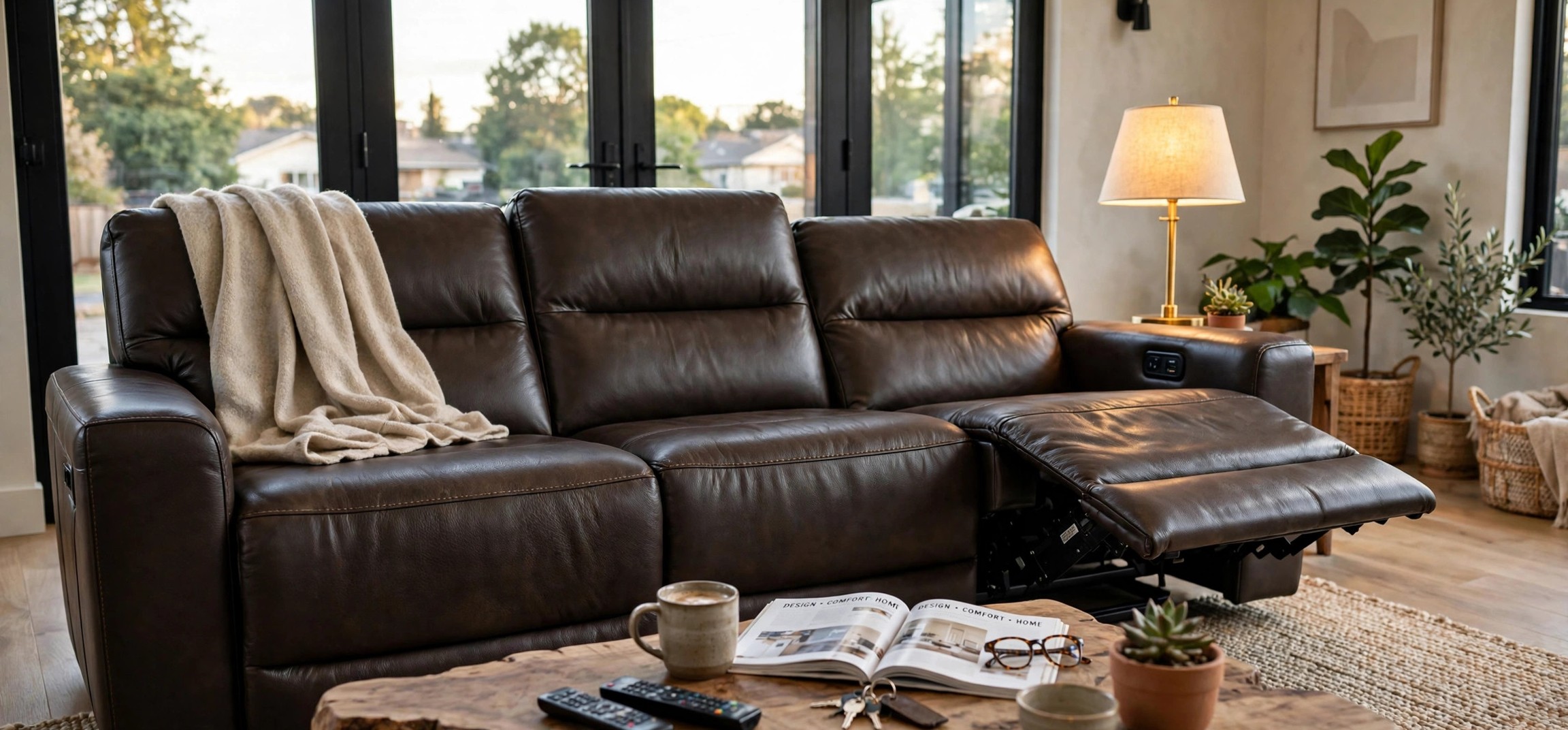
Upholstery is the next big decision. Fabric gives a soft, inviting feel and comes in a huge range of textures and patterns. Leather, and its synthetic counterparts, look more polished and can be simpler to wipe down, though that depends on the finish. If children or pets share the house, a hard-wearing, easy-care fabric or leather is usually the wiser buy.
Colour should work with what is already in the room. Neutrals are forgiving and easy to live with, while deep blue, green or burgundy can turn the chair into a deliberate focal point. Small details matter as well: wooden legs, metal trim and stitching all nudge the finished look in one direction or another.
Before you commit, test the chair if you can. Sit in it properly and check seat depth, back support, arm height and how smoothly the recline operates. A solid frame and a mechanism that moves without sticking are what separate a chair that lasts from one that starts to wobble within a year. With a motorised model, also confirm the power requirements and what the warranty actually covers.
Styling it and keeping it in good shape
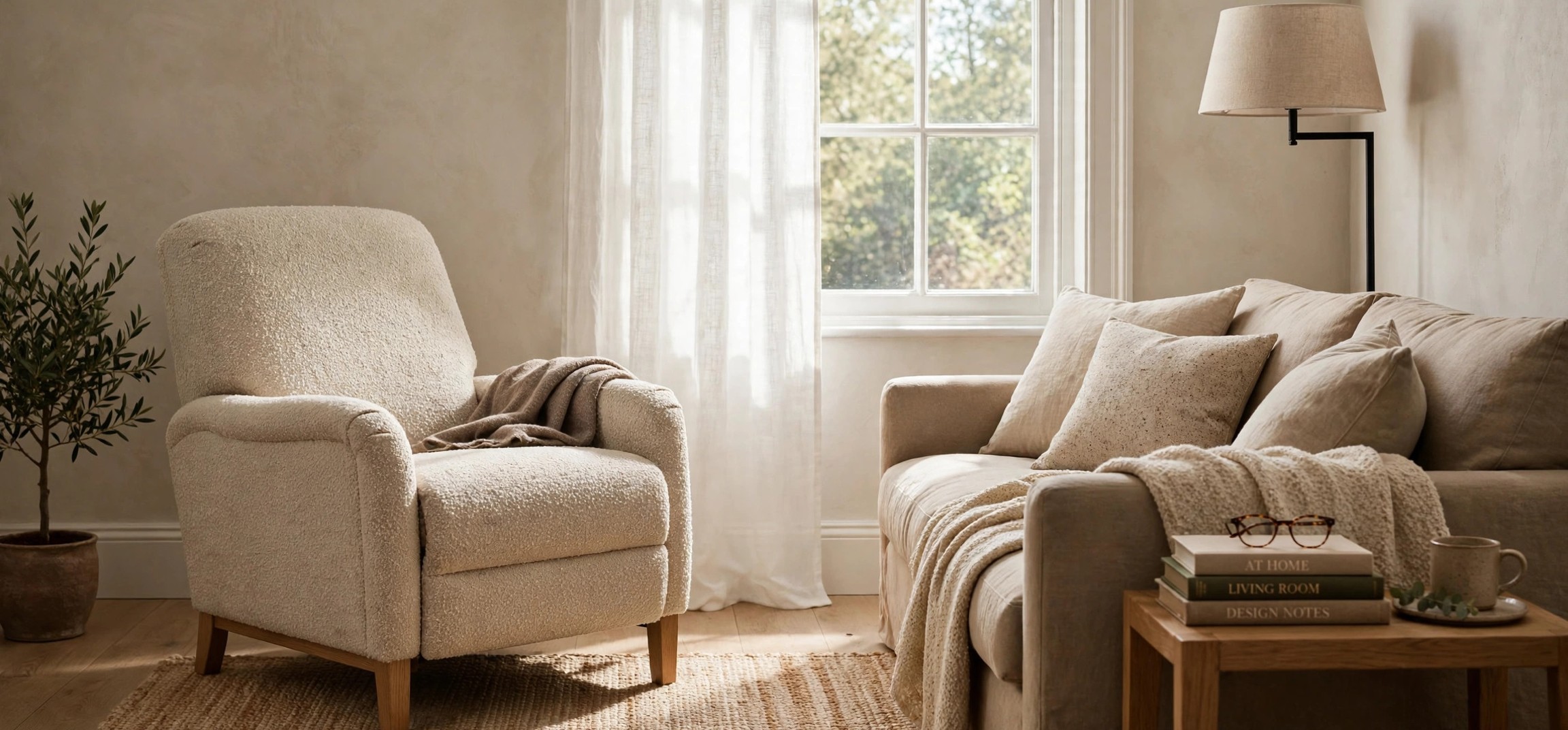
Once it is home, the chair can anchor a small relaxation zone. Place it near a floor lamp, a side table or a bookshelf and you have a reading corner with very little effort. A cushion or a soft throw in a matching tone can finish the look, provided you stop before the area starts to feel cluttered.
Lighting deserves a thought as well. A lamp that throws focused light over the seat makes evening reading far more pleasant, while daylight from a nearby window keeps the corner feeling open during the day.
Upkeep is straightforward but worth doing regularly. Vacuum fabric to lift dust, deal with spills following the maker’s guidance, and use cleaners suited to leather or synthetic leather where relevant. Every so often, check the reclining parts and clear away anything that could jam them. An Accent chair recliner looked after this way should keep both its looks and its smooth action for years.