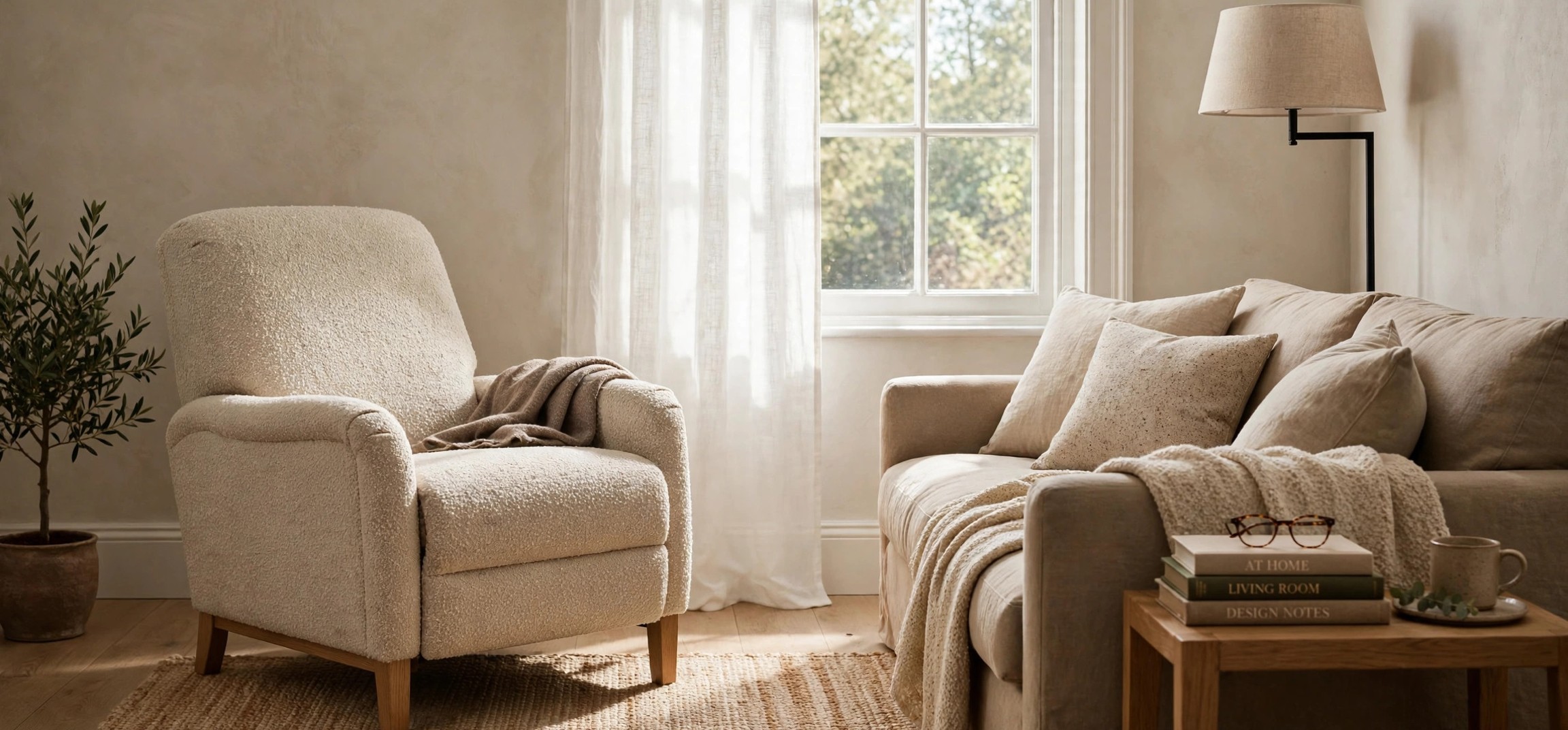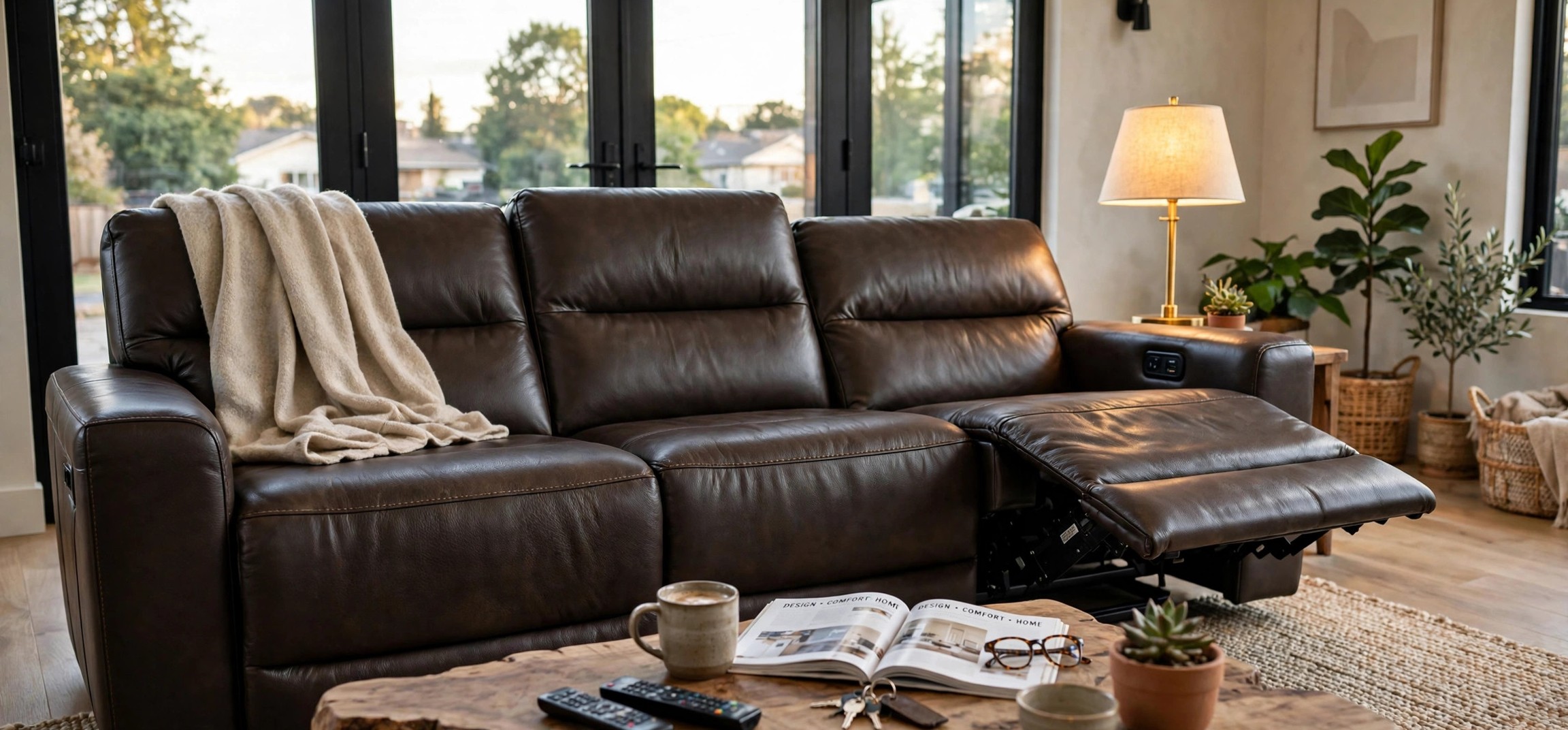
For a living room that is meant to be lived in, a sofa that adjusts itself has obvious appeal. A motorised recliner sofa trades the old pull-handle for an electric motor, so the backrest and, on most models, the footrest move smoothly when you press a button. That makes it easy to find your preferred angle for a film, a book or an evening with family, without wrestling with the furniture. With so many styles, fabrics and layouts available, these sofas have moved from niche purchase to a mainstream choice for anyone who wants comfort without sacrificing a contemporary look.
How a motorised reclining sofa works
The core idea is simple: an electric motor inside the frame drives the back and footrest, replacing the lever or body-weight shift of a manual recliner. Controls are usually built into the side of the seat, although some designs come with a small remote instead, and the movement tends to be smoother and more precise than a manual mechanism.
Higher-spec models add more than just movement. Adjustable headrests, lumbar support, USB charging points and memory positions that recall your favourite setting are all common, and some designs include a centre console, cup holders or hidden storage. Those extras are what make certain models especially well suited to a home cinema or entertainment room.
Size and layout vary widely. A power reclining range will typically include two-seat loveseats, standard three-seaters and larger sectionals, so you can match the sofa to both the room and the number of people who will use it regularly.
What makes one worth buying
Ease of use is the headline benefit. Because the motor does the work, changing position takes almost no effort, which is a real advantage for anyone who finds manual recliners awkward or stiff to operate. You can also stop at any point in the travel, rather than being limited to a few fixed positions.
Personal comfort is the second draw. Many sofas let the back and footrest move independently, so one person can sit upright with their feet down while another reclines fully. Where headrest and lumbar adjustment are included, the fit can be tuned further, whether you are watching television, dozing off or recovering after a long day.
Looks matter too. Modern designs tend to favour clean lines, quality upholstery and controls that sit discreetly in the frame, so the sofa can suit anything from a minimalist interior to a more luxurious entertainment space. And for family viewing, a sectional with several reclining seats turns movie nights and big matches into a far more comfortable occasion, with cup holders and charging ports removing the need for extra side tables and trailing cables.
Choosing the right model for your room
Room size comes first. Measure the floor space carefully and check the maker’s clearance figures: some sofas recline close to a wall, while others need a gap behind the backrest, and you also need clear space in front for the footrests to extend. Getting this wrong is the most common buying mistake.
Next, think about upholstery. Fabric feels soft and welcoming and is available in countless colours and textures. Leather and synthetic leather give a smarter, more formal impression and are often easier to wipe clean, though the exact finish matters. Homes with children or pets will usually be better served by a durable, forgiving material.
Frame and mechanism quality deserve equal attention. Look for smooth, quiet operation, a stable frame that does not flex, and a warranty that specifically covers the motor and electrics. If you can try the sofa in a showroom, do so: seat firmness, back support and how intuitive the controls feel are hard to judge from a photograph.
Finally, weigh features against real use. Adjustable headrests, USB ports and storage consoles are genuinely useful in the right home, but paying for extras you will never touch only pushes the price up. A Power reclining sofa with the right basics will serve you better than a fully loaded model whose gadgets gather dust.
Keeping it working well
Regular care protects both the look and the mechanism. Vacuum fabric upholstery with a suitable attachment, clean spills as the manufacturer directs, and use only products recommended for your leather or synthetic leather. Keep the moving parts free of dust and clutter, avoid parking heavy objects where they could obstruct the mechanism, and follow the maker’s guidance on power connections.
If the sofa starts making unusual noises or stops moving as it should, check the service instructions first rather than forcing the mechanism or opening it up yourself. Most faults are minor, but a motorised frame rewards a little patience and the right advice far more than a DIY repair.